From apps to agents in messengers: a practical guide for EU companies
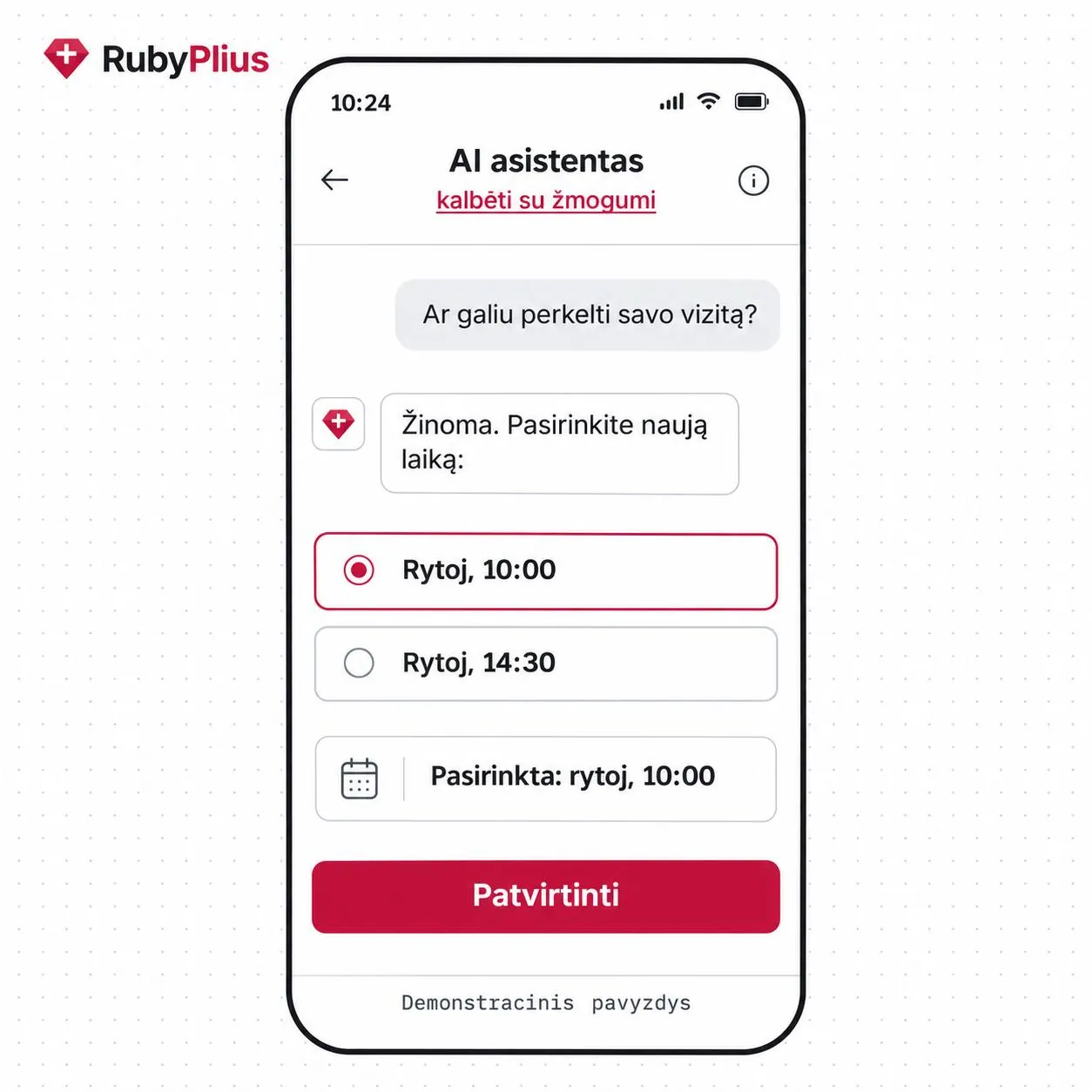
This autumn a start-up called Photon staged a funeral for mobile apps, speeches included. TechCrunch, reporting on Photon's $4.5 million seed round in October, called it "obviously somewhat tongue-in-cheek". Photon builds the plumbing that lets AI agents work inside WhatsApp, iMessage, Telegram, Slack and other messengers, so the stunt had a clear point: people would rather talk to a service in a chat they already use than install another app.
Photon's CEO, Daniel Tian, was careful not to oversell it: "Honestly, it's going to take a while, but I think, directionally, it's inevitable."
That is a fair description of where things stand. Apps and web portals will be with us for years. But the expectation is moving: the people who use your system — customers, partners, your own team — increasingly want to reach it through a conversation.
What "access from a chat" really means
Behind the headlines, the request we hear is practical. People want three things from one chat window:
- Answers. "Where is my order?", "What documents do I still need to send?", "Which clients have unpaid invoices?"
- Figures. "How many bookings did we have this week compared with last?", "What were sales by region in October?"
- Changes. "Move my appointment to Thursday", "Update the delivery address", "Add this product to the catalogue".
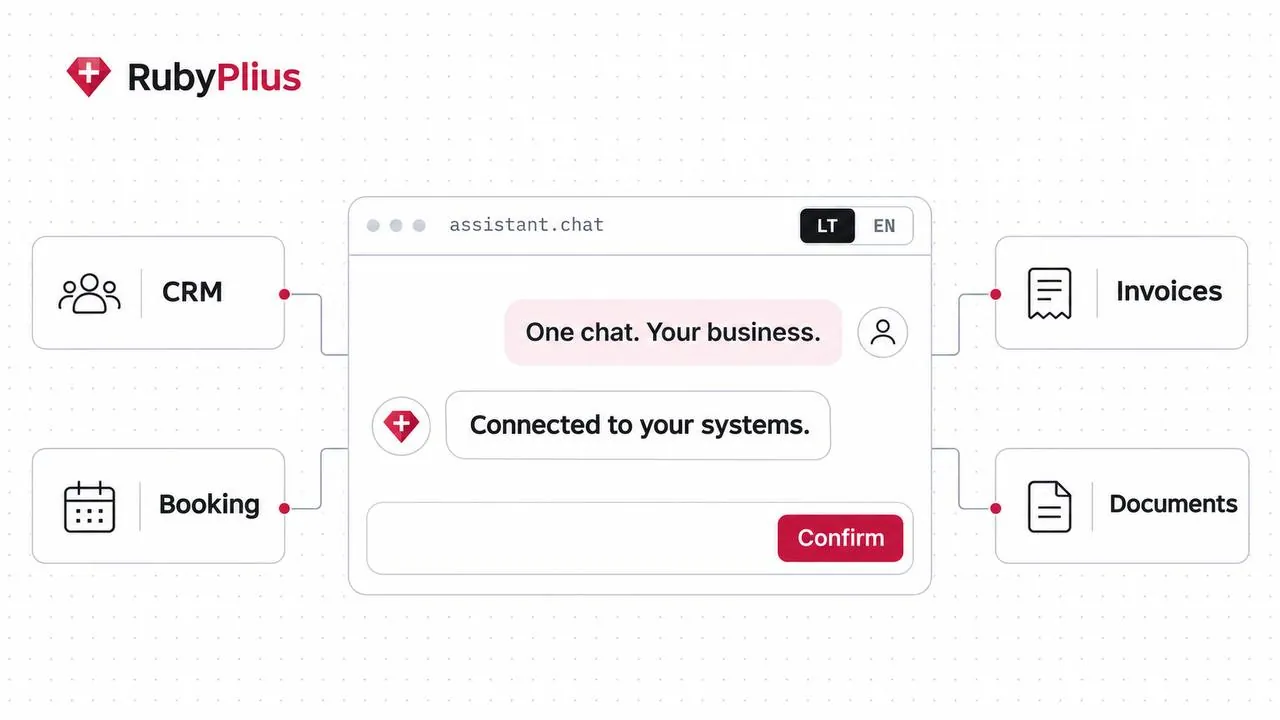
None of these needs a new system. The answers, figures and actions already exist in your CRM, ERP, booking platform, web application or document store. What is missing is a single conversational entry point that connects to them safely.
Built on top, not instead
Whether your product runs on Ruby on Rails, another web framework or a mix of SaaS tools, the approach is the same. The assistant becomes one more client of your existing systems:
- it connects to a messenger — WhatsApp, Telegram, Messenger, Viber, Slack or Microsoft Teams, depending on who the users are;
- it uses a short, explicit list of tools — "look up order", "monthly sales report", "reschedule booking" — each implemented and tested by engineers;
- those tools call your systems through their APIs with the permissions of the person asking;
- reading is instant; anything that changes data is shown back for confirmation first;
- every request and action is logged.
The language model understands the request and writes the reply. Your code decides what is allowed to happen.
The European part: doing it properly
For companies in Lithuania and the rest of the EU, the regulatory side is not an afterthought. It shapes the design from day one:
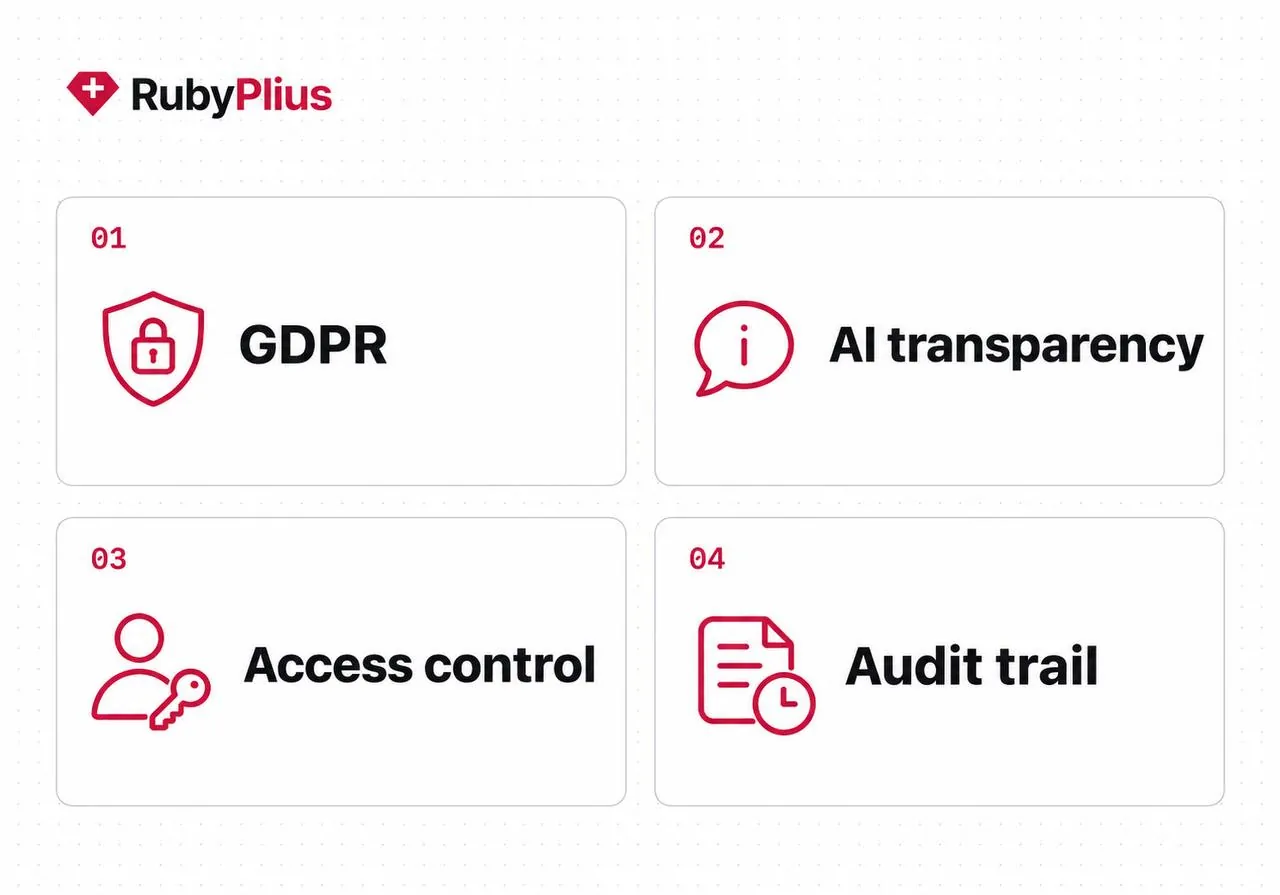
- GDPR. Messages often contain personal data. Decide what the assistant may see, minimise what is sent to the AI provider, choose where data is processed and stored, and make sure your records of processing and contracts with providers reflect it.
- Transparency under the EU AI Act. People should know when they are talking to an AI system. A clear first message and an easy way to reach a human solve this and also build trust.
- Access control. The assistant must never be able to do more than the user behind it. Reuse the roles and permissions your system already has.
- Audit trail. In regulated sectors such as healthcare or finance, a full log of who asked what and what was changed is essential. It is good practice everywhere else.
Languages: an advantage, not a problem
Lithuanian businesses often serve customers in Lithuanian, English, Russian, Polish and other languages. Traditional apps need every screen translated. A well-designed assistant can understand and reply in the customer's language while working with the same underlying data. The things that must stay exact — prices, legal terms, medical information — should come from your systems, not be paraphrased by the model.
An illustrative scenario
The following is an illustrative scenario, not a specific client.
Imagine a Lithuanian service company with an online booking system, a CRM and an accounting tool. The office manager's day is full of small requests: customers asking to move appointments, colleagues asking for weekly figures, the owner asking which invoices are overdue.
A first step could be an internal assistant in the team's messenger. It answers "How many bookings this week?" from the booking system, "Which invoices are overdue?" from accounting, and prepares changes such as rescheduling, which the manager confirms with one tap. Once the team trusts it, a customer-facing version can follow on WhatsApp or Messenger, limited to the customer's own bookings and clearly marked as an AI assistant with a route to a human.
How to start
- Pick one audience — your team or your customers — and one messenger they already use.
- List five questions they ask most often and where the answers live.
- Start read-only. Answers and figures first; changes later, always with confirmation.
- Write down the data flows for GDPR before going live.
- Review after a few weeks and decide what to connect next.
Apps are not being buried just yet. But the businesses that let people reach their systems from a chat — carefully, with clear rules — will be ready when the direction Photon describes becomes the norm.
Let's talk
Would you like your customers or your team to get answers, reports and changes from a messenger, on top of the systems you already run? Describe your setup and we'll propose a first, well-defined step. Contact us: rubyplius.lt/en/contact or hello@rubyplius.lt.
Source: Sarah Perez, "Photon held a funeral for mobile apps. Now it has $4.5M to help replace them with agents", TechCrunch, 1 October 2026.